
A visit to Waltham Place in Berkshire is a good opportunity to confront some of the dilemmas of the nature-inspired garden. Owner Strilli Oppenheimer employed the late Henk Gerritsen to help her ‘naturalise’ parts of the 1920s Percy Cane layout, all pergolas and walled and hedges and walled off garden rooms. Henk’s own ‘Priona Garden’ in eastern Holland had been her inspiration to get him over, as he was obviously good at gardening without making war on nature (although I don’t recall much food growing at Priona, I think it grew in the local supermarket where there was no nature to go to war with). Priona was wonderful for the balance between wildness and hedged and trimmed and mown order – a very Dutch balance, so it was right he should be involved at Waltham.
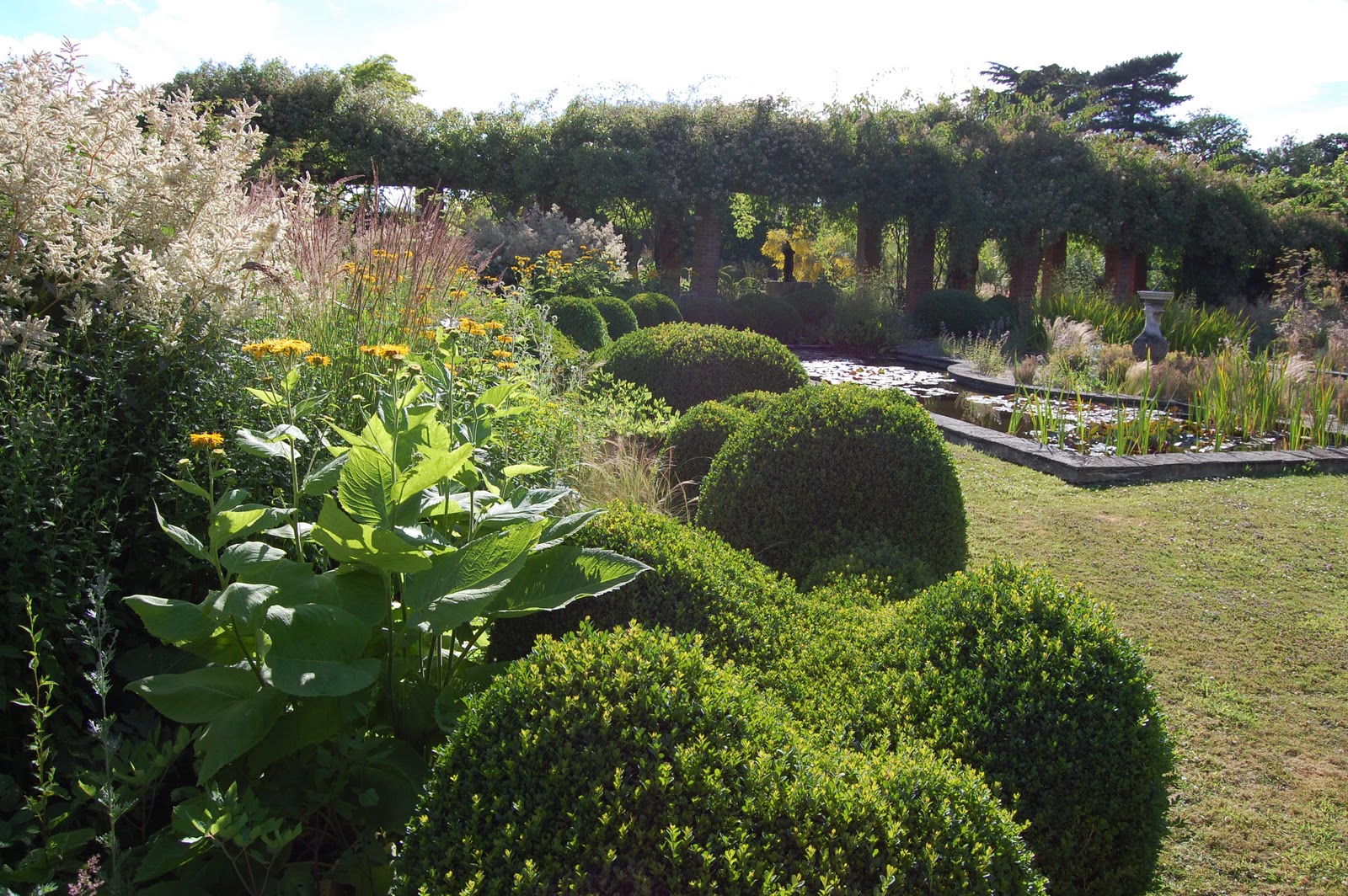

Ground-elder is a problem at Waltham, and since the garden staff cannot rid the garden of it using the bio-dynamic methods they are instructed to use (chemical warfare is actually little better either in my experience) the pragmatic decision has been taken to accept it. In one big courtyard area it is allowed in part (but heavily suppressed by lots of seriously big perennials) but kept from spreading by a cordon sanitaire of box, ingeniously Henk-clipped into a caterpillar shape – so much more fun than self-consciously trendy cloud pruning. In another garden it is allowed free-rein, but has to face vigorous perennials and so is too kept in check; earlier in June I think this is a very effective naturalistic perennial blend but by July it has gone over. A gravel garden is a riot of self-seeding, whilst the most successful part of the garden as far as I was concerned was an allee edged by walls, where shrubs and climbers had been allowed to spread just so, perennials to spread and intermingle and self-sow – the whole looks just so perfectly on the edge of tumbling into wildness. Head gardener Beatrice Krehl and her staff have managed to create a perfect embrace of the wild and the formal here.
Not all works, or has achieved such balance yet. A perfectly good terrace has been almost entirely lost to cistus and lavender and much other shrubbery in the final stages of the rangy senile decay to which many Mediterranean species seem to suffer, while a long border seems a long way from having a successful mix of species (nothing in flower in early July!). All in all, though, an immensely brave experiment in letting formality go to seed skillfully and gracefully.
 | |
| Radical idea..... plant out some wildflowers in turf, maintain by "grazing like a cow" (Henk Gerritsen) - pulling up tufts of what you don't want and the add definition by deep edging between the wildy bits and the mown lawn. |

